How do we measure the worth of a child?
By the systems we build to protect them.
Why Response Matters
These truths belong together: delayed disclosure is common, false reports are uncommon, and child protection systems should be built to respond before harm continues.
Delayed Disclosure Is Common
Children and adolescents may delay or withhold disclosure of child sexual abuse, sometimes until adulthood.
Systems should be prepared to respond whenever disclosure occurs.
Systematic review • Adult disclosure reviewFalse Reports Are Uncommon
Research on sexual assault reports estimates intentionally false reports at approximately 2-8%.
A delayed, unsubstantiated, or unprosecuted report is not, by itself, evidence that the report was false.
EVAWI • NSVRCSystems Must Carry the Responsibility
Delayed disclosure and incomplete early information make documentation and pattern review essential.
Survivors should not have to expose harm after the fact for systems to act.
Wisconsin is Falling Behind Other States on Child Protection
Children deserve safe adults, safe organizations, and safe systems, especially in places families are asked to trust.
Project Worth works to close gaps in reporting, oversight, and accountability so churches, schools, youth-serving organizations, and communities are held to higher standards of prevention and protection.
Our goal is simple: help make Wisconsin the safest state for children in the nation by 2030, then help make that protection the standard for every child.
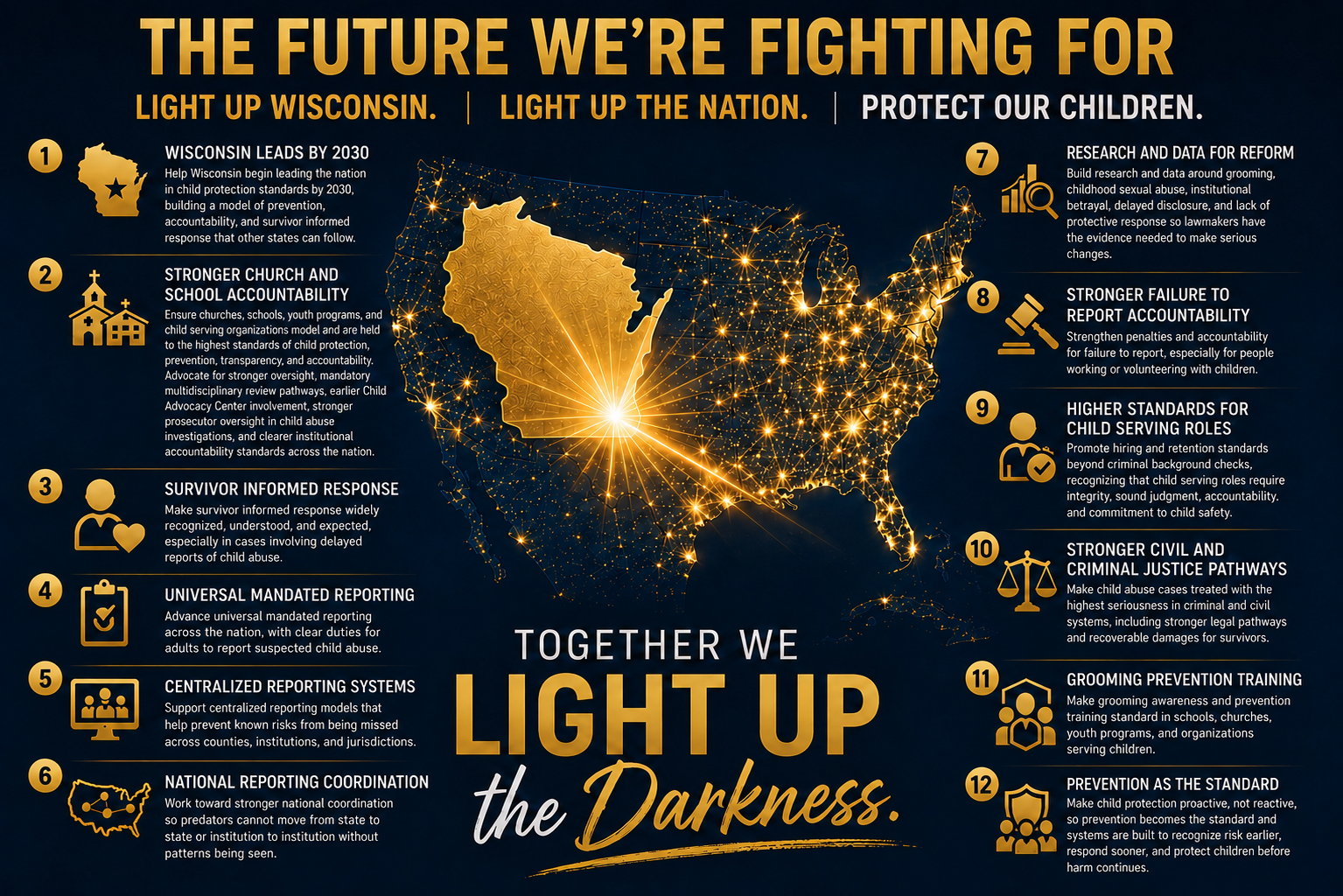
The Future We’re Fighting For
Project Worth is working to identify the strongest child protection policies already being used across the country, study where Wisconsin is falling behind, and help bring the best protections here.
The goal is simple: make Wisconsin the safest state for children in the nation by 2030. Then help make that protection the standard for every child in the United States.
Does one of these areas speak to you? We would love to connect you with the team members helping move that work forward.
The Case for Change
Explore deeper system gaps, survivor voices, advocates, and partner lights through the Light the Way map.
For the full gap-by-gap view, visit Light the Way and help us build public awareness across Wisconsin and beyond.
Volunteer With PurposePartner in Prevention and Policy Research
Project Worth welcomes researchers, students, advocates, policy minds, and community members who want to help evaluate what is working in child protection, what is failing, and what Wisconsin can learn from stronger models in other states.
Interested in helping us research, review, or compare child protection policies?
Explore the Case for Change and help us Light the Way.